
01
Unit conversion example
Receive one box of 100 bolts. After issuing 30, the remaining balance is 70.
Control every unit. Reduce every loss.
Receive materials by package or box, issue them in usage units, and calculate remaining stock from a defined conversion ratio.

OPERATIONAL CHALLENGES
Materials arrive in boxes but are consumed as individual units.
Manual unit conversion and balance calculations can drift.
Teams need visibility into receipts, issues, returns, and stock levels.
SOLUTION OVERVIEW
Manage stock through receiving and issuing transactions. Define package units and conversion ratios—for example, one box contains 100 pieces—then issue the quantity used. RFID can identify a box or container where appropriate; each consumable does not need its own tag.
01
Receive one box of 100 bolts. After issuing 30, the remaining balance is 70.
02
Use RFID to identify a box or container during receiving and movement; do not tag every bolt or screw.
HOW IT WORKS
Create material records and usage units.
Set conversion ratios, such as pieces per box.
Record receipts and identify packages with RFID where appropriate.
Record issues and returns, then calculate the remaining usage units.
KEY CAPABILITIES
INTEGRATED DEVICE ECOSYSTEM
Use a scale to calculate quantity by weight, and RFID to identify a box or container where useful. Each device has a distinct role.
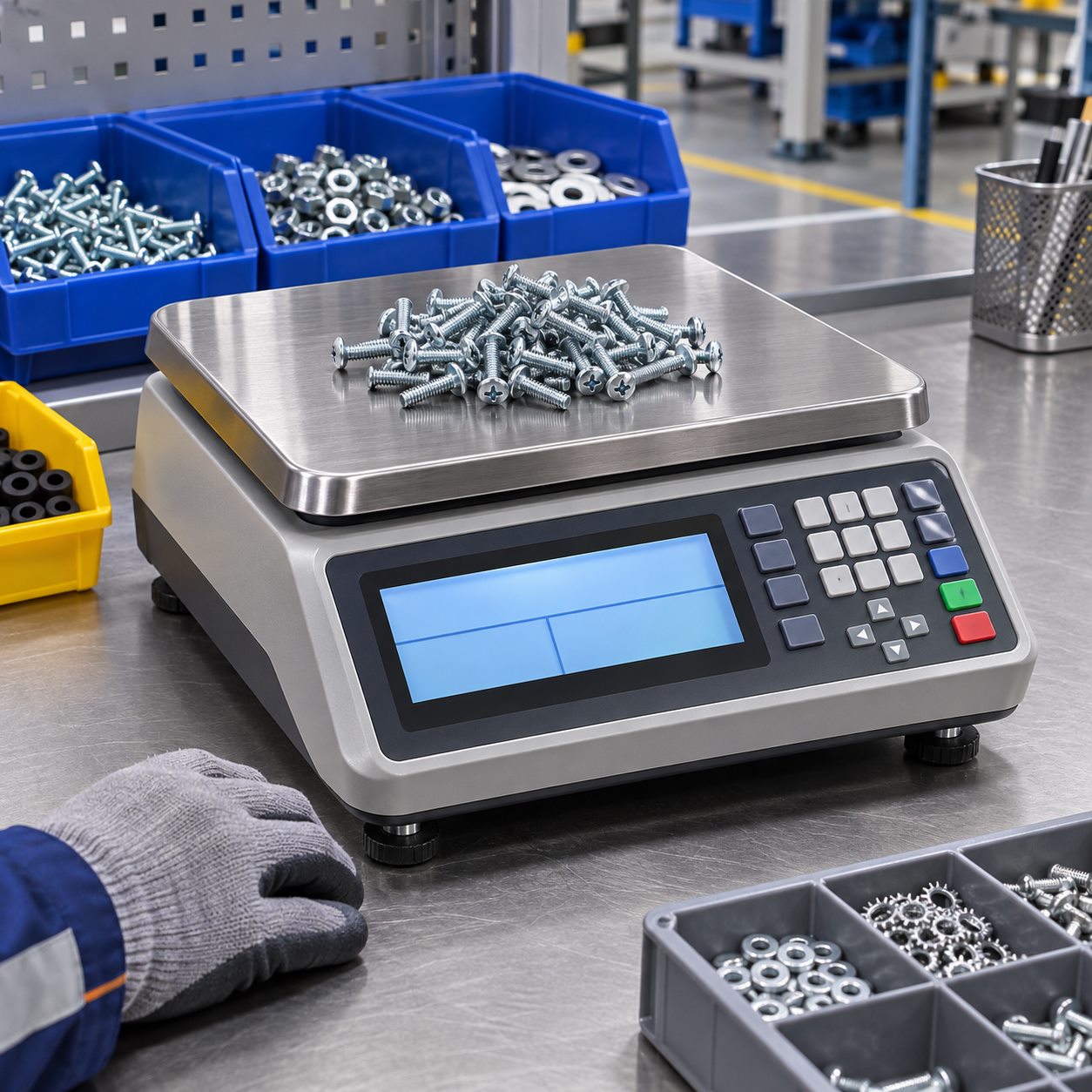 Primary deviceIllustrative device concept. Final model and configuration depend on project scope.
Weight-based counting device
Measures net weight and calculates quantity from a calibrated average unit weight. Suitable examples include screws, nuts, nails, small spare parts, and consumables.
Operating principle
Formula: Quantity = Net Weight / Average Unit Weight. Example: 350 g net weight ÷ 5 g average per screw = 70 screws.
This device counts by weight, not RFID. Accuracy depends on scale resolution, unit-weight consistency, calibration, and material characteristics.
Operational benefit
Calculate quantities for receiving and issuing small components by weight.
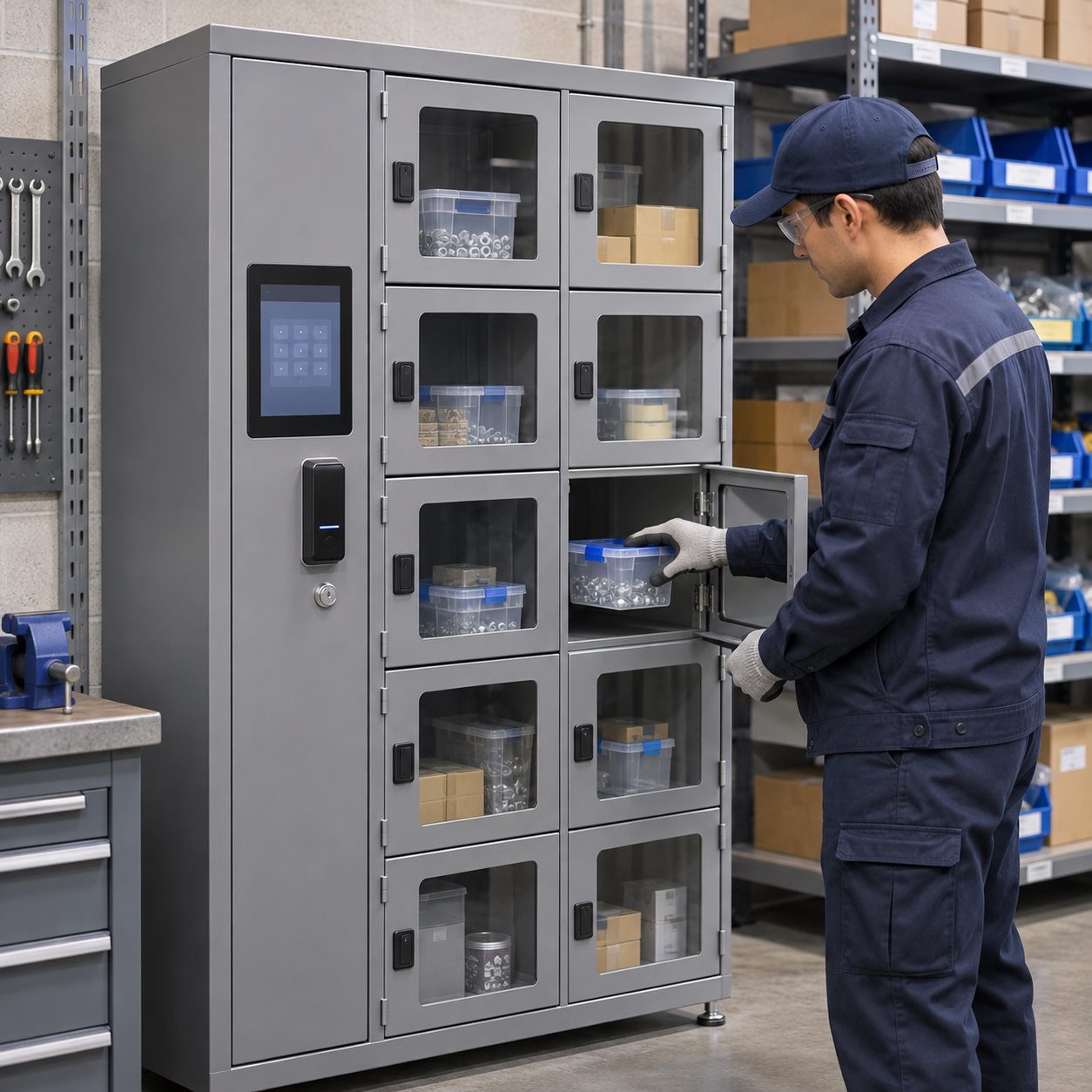 Illustrative device concept. Final model and configuration depend on project scope.
Controlled-storage cabinet concept
A representative cabinet concept for controlled material storage and issuing. User identification, issue and return records, and inventory monitoring must be confirmed against the actual device and project scope.
Access control, user identification, issue and return records, and inventory monitoring require technical confirmation before being presented as available capabilities.
Operational benefit
Explore a controlled storage and issuing point suited to the organization's workflow.
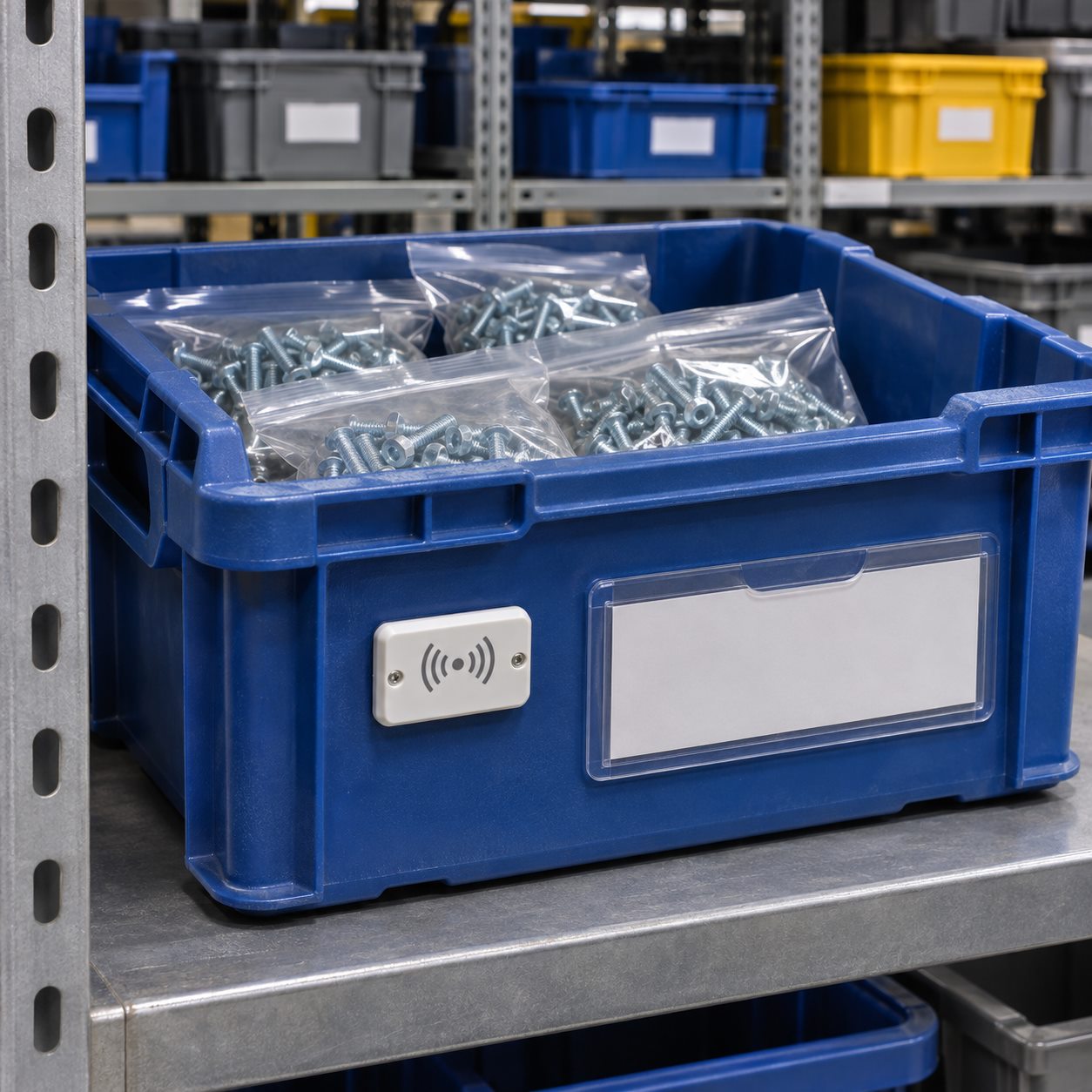 Illustrative device concept. Final model and configuration depend on project scope.
RFID container identification
Attach an RFID tag to a box or container to associate it with a material ID, storage location, package information, and stock records. Individual screws, nuts, or nails do not each need a tag.
The tag identifies the box or container, not each small material item.
Operational benefit
Identify a container and its stock record without tagging every consumable.
INTEGRATED OPERATIONS
Devices identify or count physical items, software records the workflow, and dashboards make the resulting information available to teams.
01
Small components or packages with defined receiving and issue units.
02
Scale counts by weight; RFID identifies a container where useful.
03
Records receipts, issues, returns, and unit conversions.
04
Stock balances and movement history in usage units.
BUSINESS BENEFITS
TARGET INDUSTRIES
Industry groups are examples. Tracking methods and project scope depend on each organization's workflow.
RELATED SOLUTIONS
NEXT STEP
Discuss tracking units, equipment, and scope for your organization.