
01
Individual asset tracking
Assign an Asset ID and RFID tag to desks, chairs, computers, printers, medical equipment, or machinery that must be tracked individually.
Know where every asset is.
Manage assets individually, or track a box or container when that is the practical unit of management.

OPERATIONAL CHALLENGES
Manual inventories take time and are difficult to verify consistently.
Ownership and transfer records may be spread across separate records.
Maintenance and lifecycle decisions depend on a continuous asset history.
SOLUTION OVERVIEW
Choose the tracking unit that fits the workflow: tag assets that need individual control, or identify a box or container as one management unit. Every item inside a box does not automatically need its own tag.
01
Assign an Asset ID and RFID tag to desks, chairs, computers, printers, medical equipment, or machinery that must be tracked individually.
02
Identify a box or container as the management unit for equipment stored or moved together. Tracking inside the container depends on operational requirements.
HOW IT WORKS
Record asset details and choose the tracking unit.
Associate the Asset ID with an asset or container tag.
Use a reader to verify assets and record transfers or responsibility.
Keep maintenance requests, repair history, and asset reports together.
KEY CAPABILITIES
INTEGRATED DEVICE ECOSYSTEM
Choose RFID reading equipment for each workflow, from mobile inventories to designated entry and exit points.
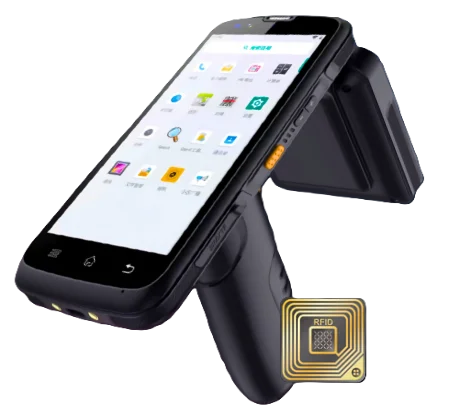 Representative reader image. The supported model depends on the project.
Portable UHF RFID reader
Staff can walk an area and read multiple tags within the reader's supported range. Use it for inventory and verification, incoming and outgoing records, and comparison to identify missing or unregistered assets.
Operational benefit
Verify multiple assets in one mobile inventory workflow.
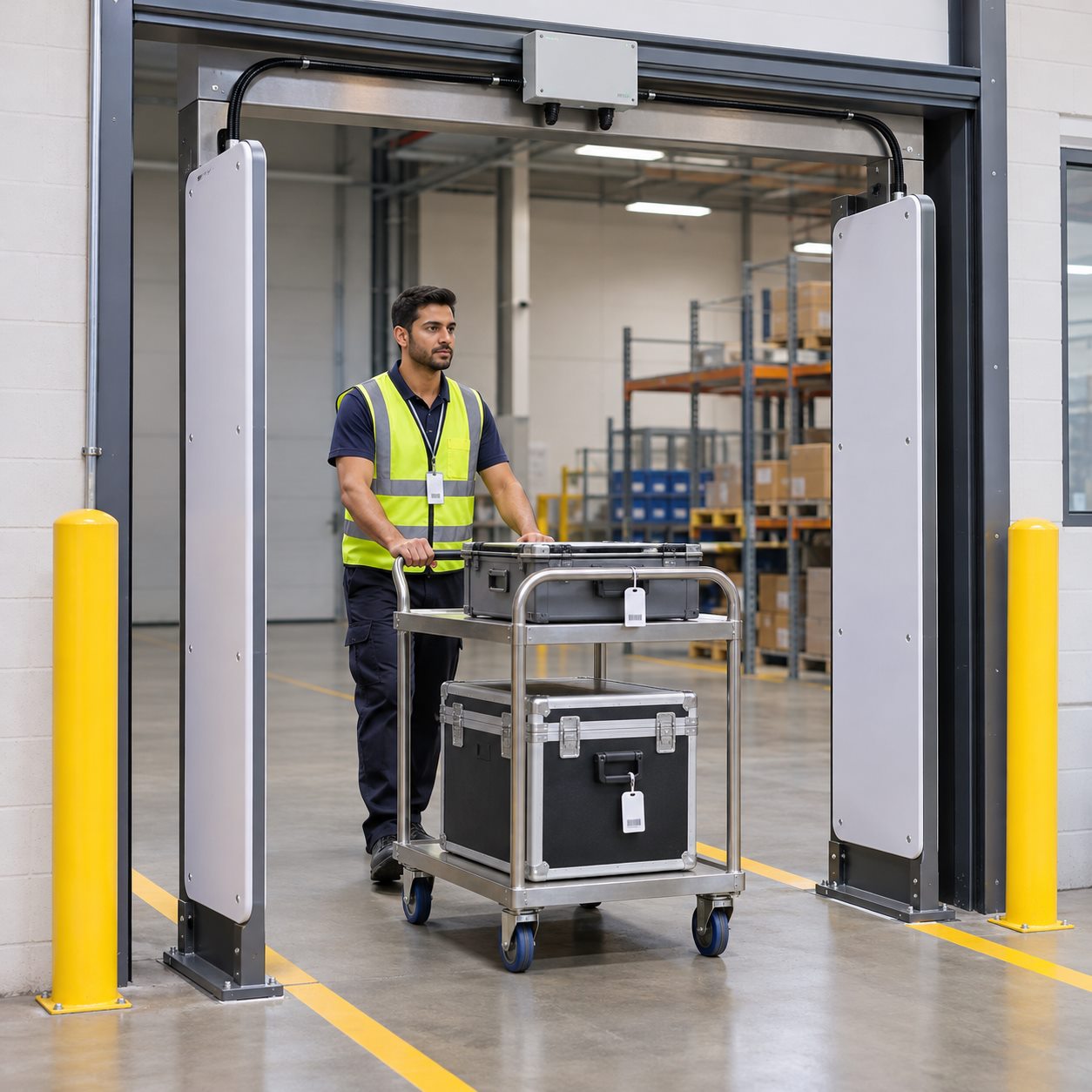 Illustrative device concept. Final model and configuration depend on project scope.
Fixed-point reader
A fixed reader and antenna are installed at a designated entrance or exit to detect tagged assets passing through and send events to Vizzel software when configured.
Operational benefit
Support hands-free movement monitoring at a defined checkpoint.
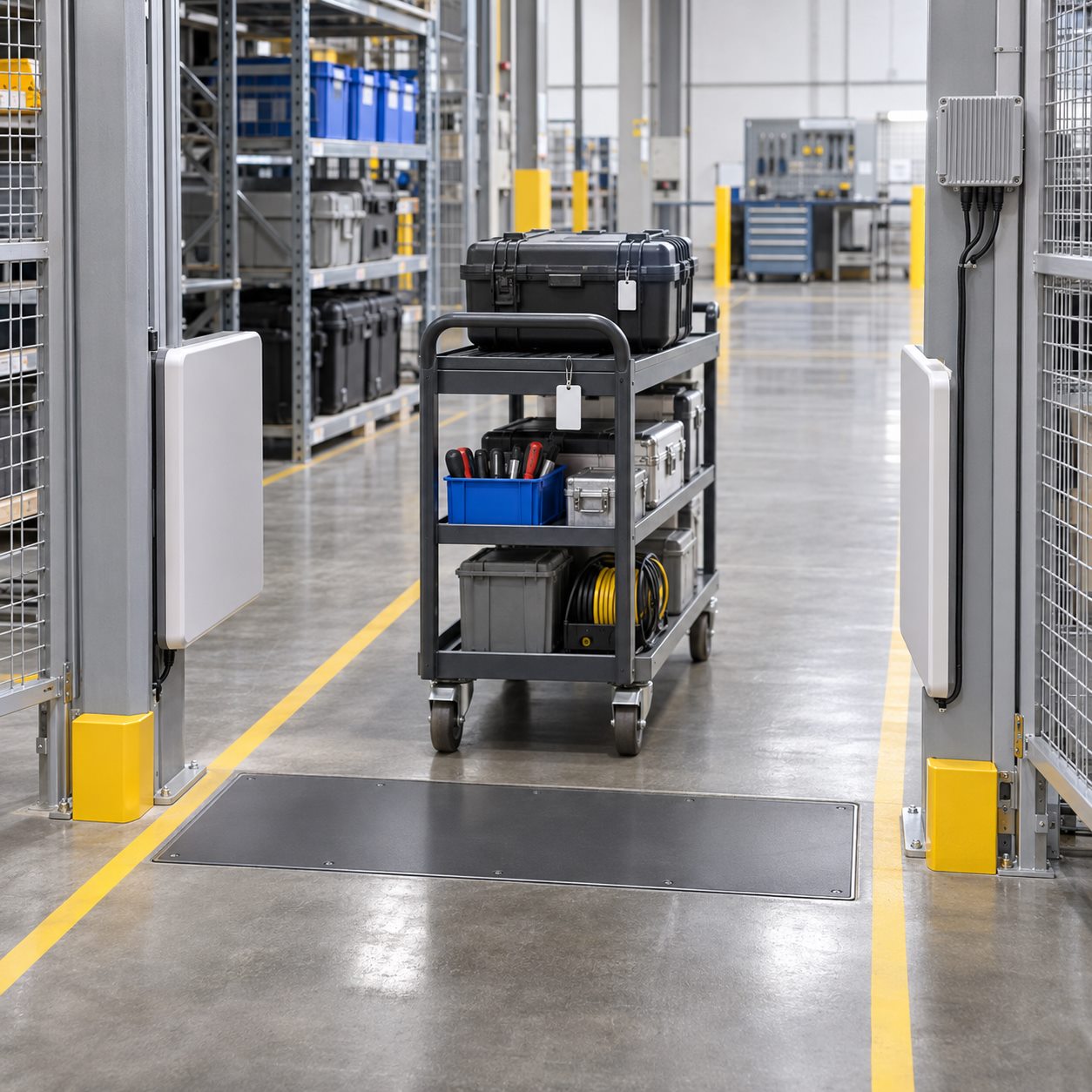 Illustrative device concept. Final model and configuration depend on project scope.
Passage antenna system
An RFID antenna system is installed at a designated passage to identify tagged assets or containers hands-free and pass events to connected software.
Read accuracy depends on antenna design, tag orientation, and the installation environment.
Operational benefit
Identify tagged items at a defined crossing without a manual scan.
INTEGRATED OPERATIONS
Devices identify or count physical items, software records the workflow, and dashboards make the resulting information available to teams.
01
RFID-tagged assets or identified boxes and containers.
02
Handheld reader, RFID portal, or passage antenna system.
03
Asset records and movement event platform.
04
Inventory, location, and movement history.
BUSINESS BENEFITS
TARGET INDUSTRIES
Industry groups are examples. Tracking methods and project scope depend on each organization's workflow.
RELATED SOLUTIONS
NEXT STEP
Discuss tracking units, equipment, and scope for your organization.